
New York Freedom of Information Law
FOIL is the backbone of public access in New York. It lives in Public Officers Law Article 6 and applies to state and local agency records, including Nassau County departments. The law starts from a simple idea: the public's business should be open to the public. That principle is set out in Public Officers Law § 84.
FOIL is not a one-size tool, though. Court case files do not run on FOIL. The courts say plainly that FOIL is not a general case-file request system, so a court record comes from the clerk or a case portal, not a FOIL request. The image below opens the official text of the FOIL declaration.
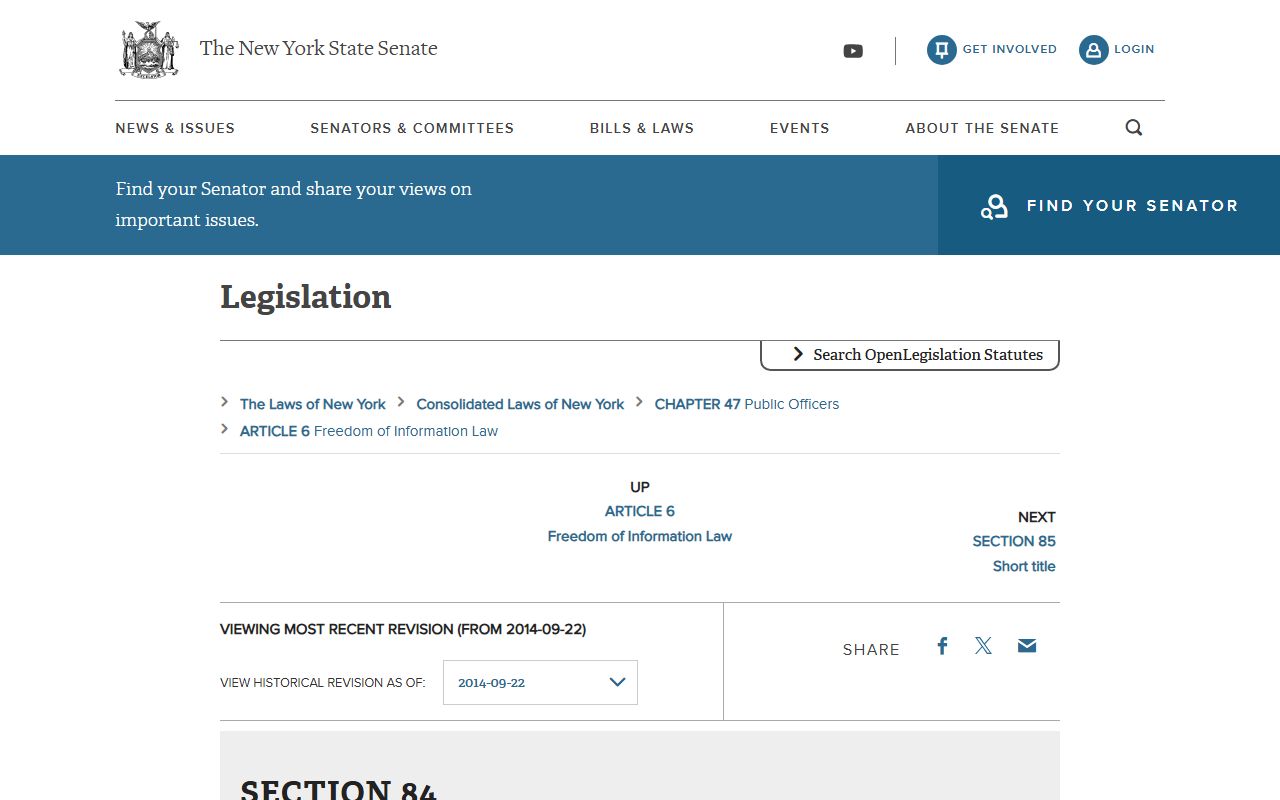
For court files, see the court records page, which covers WebCivil, WebCriminal, and NYSCEF.
What the Nassau County Clerk Maintains
Plenty of public records sit outside the courts. The Nassau County Clerk keeps land records, judgments, and business filings that anyone can access. These are separate from FOIL agency records, but they are a major source of public information about property and businesses in the county.
- Deeds, mortgages, and satisfactions for Nassau real property.
- Notices of pendency, mechanics liens, and federal tax liens.
- Civil judgments and transcripts of judgment.
- Business certificates and incorporation records.
Land and business records are pulled at the Clerk's office, not through a FOIL request. The full breakdown is on the Nassau County Clerk page.
Court Records vs. Agency Records
This is the split that trips people up most. New York runs two access systems, and they do not overlap. FOIL governs agency records, the files that county departments create as they do their work. Court case files run on a separate track of court rules, the Judiciary Law, and case-specific confidentiality statutes. Sending a FOIL request to a court for a case file is the wrong tool.
| Agency Records | Court Case Records | |
|---|---|---|
| Governed by | FOIL (Public Officers Law) | Court rules and Judiciary Law |
| Examples | Sheriff data, county reports | Civil and criminal case files |
| How to get it | Nassau FOIL web form | Court clerk or case portal |
| Appeal | FOIL appeal in 30 days | Court rules and motions |
So a Sheriff budget number goes through FOIL, while a criminal case file goes through the court. Matching the request to the right system saves weeks.
How to File a Public Records Request in Nassau County
Nassau runs an official web form for FOIL requests. It routes the request to the right department and collects the requester's contact details. The steps below cover the process from start to finish.
- Open the Nassau FOIL web form and pick the department that holds the records.
- Describe the records with enough detail for the custodian to find them.
- Add your name, address, email, and phone so the agency can respond.
- Submit the request and keep a copy of the confirmation.
The image below opens the official Nassau FOIL request form.
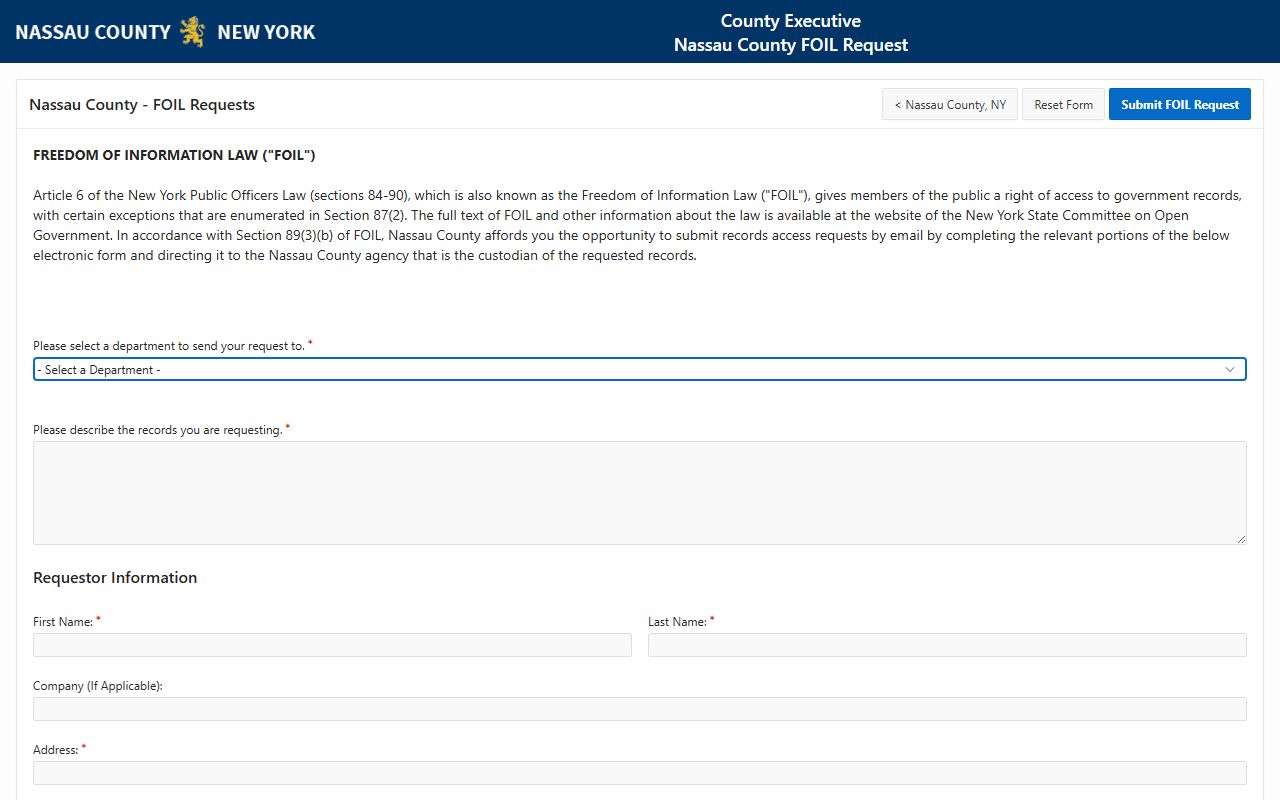
A clear, specific request gets a faster answer. Vague requests slow the search and can draw a request to narrow the scope.
Nassau FOIL Request Form Fields
The web form asks for a set of standard fields. Knowing them in advance speeds the filing. The table below mirrors the Nassau FOIL form.
| Field Label | Type | Required | Notes |
|---|---|---|---|
| Department | Dropdown | Yes | The agency that holds the records. |
| Records requested | Text area | Yes | Describe the records in detail. |
| First and Last Name | Text | Yes | Requester information. |
| Address, City, State, Zip | Text | Yes | Mailing address. |
| Email Address | Yes | Used for the response. | |
| Telephone | Text | Yes | Contact phone. |
A company field is optional, and the form has buttons to reset or submit the request.
Response Timelines
FOIL sets a clock. An agency generally must respond within five business days by granting the request, denying it, or acknowledging it with an approximate date for a longer pull. The Committee on Open Government explains these timing rules and offers guidance for both requesters and agencies. The image below opens that guidance page.
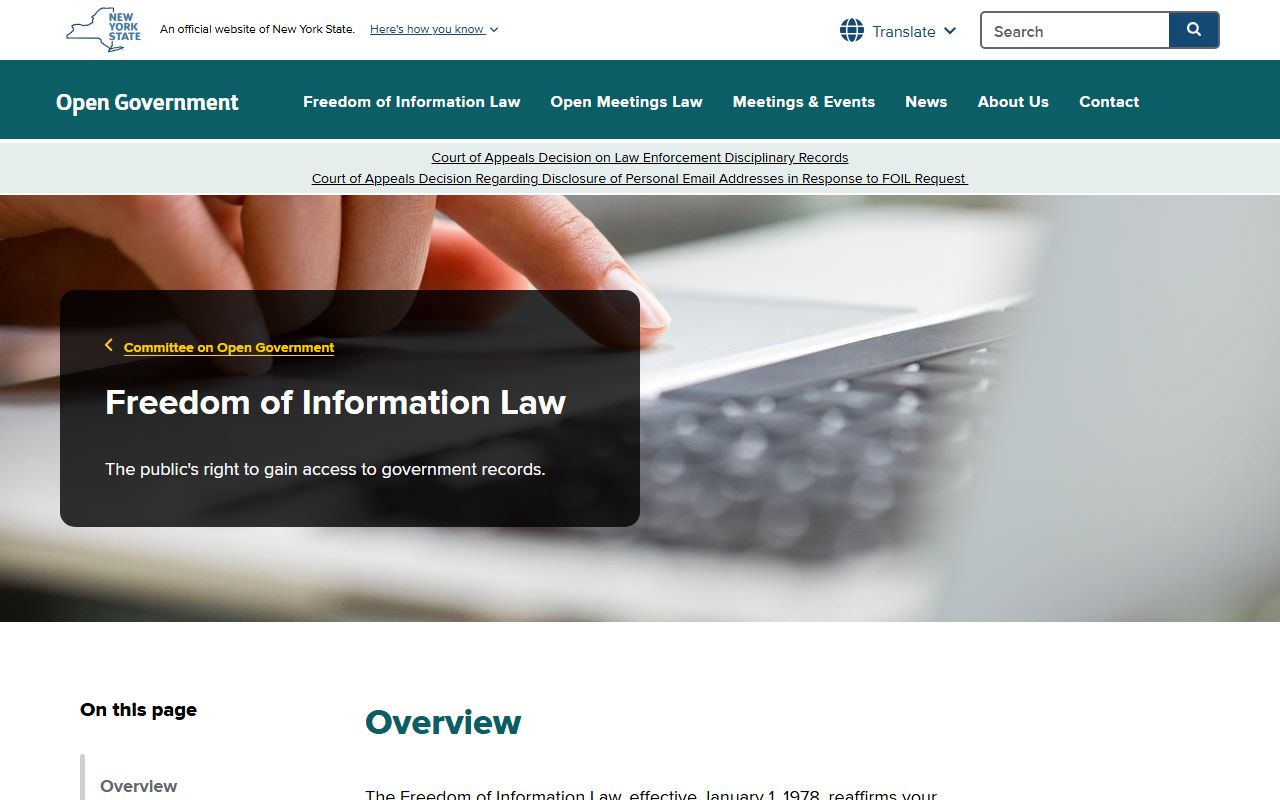
Note: a five-day acknowledgment is not the same as a grant, so a large request can still take weeks while the agency gathers and reviews records.
Public Records Fees in Nassau County
FOIL allows agencies to charge for copies, though the first review of records is generally free. County Clerk court-record copies follow the legal fee schedule. The table below lists the common copy charges a requester may face.
| Service | Fee |
|---|---|
| Plain copy (County Clerk) | $0.65/page ($1.30 minimum) |
| Certified copy (County Clerk) | $1.25/page ($5.00 minimum) |
| Court record search by name | $5 per 2-year period or fraction |
| Exemplification | $10 plus certification |
FOIL copy charges from other county agencies follow the law's fee rules, which generally limit the charge to the actual cost of reproduction.
Records That Are Exempt
FOIL access is broad but not total. Public Officers Law § 87 lists the exemptions an agency can use to withhold records. These cover records made confidential by statute, an unwarranted invasion of privacy, interference with law enforcement, trade secrets, public-safety risks, and certain internal agency materials.
An exemption is not automatic. An agency must point to a specific basis for withholding a record, and it can often redact the exempt part and release the rest. A blanket refusal without a stated reason is a weak denial that an appeal can challenge.
Other records are restricted by their own statutes rather than FOIL. Family Court files, sealed criminal records, matrimonial files, and adoption records each sit behind a specific law. Those limits are covered on the arrest records and court records pages.
If Your Request Is Denied
A denial is not the end of the road. Under Public Officers Law § 89, a requester can appeal a FOIL denial within 30 days. The appeal goes to the agency's appeals officer, who must respond within a set period. If the appeal also fails, the next step is a court proceeding under Article 78.
Keep the paper trail. Save the original request, the denial, and the appeal, since dates and wording matter if the dispute reaches a court.
An Article 78 proceeding asks a court to review the agency's decision. It is the formal last step when an appeal fails, and a court can order the agency to release records if the denial was improper. The Committee on Open Government also offers advisory opinions that can help frame an appeal, though those opinions are guidance rather than binding orders.